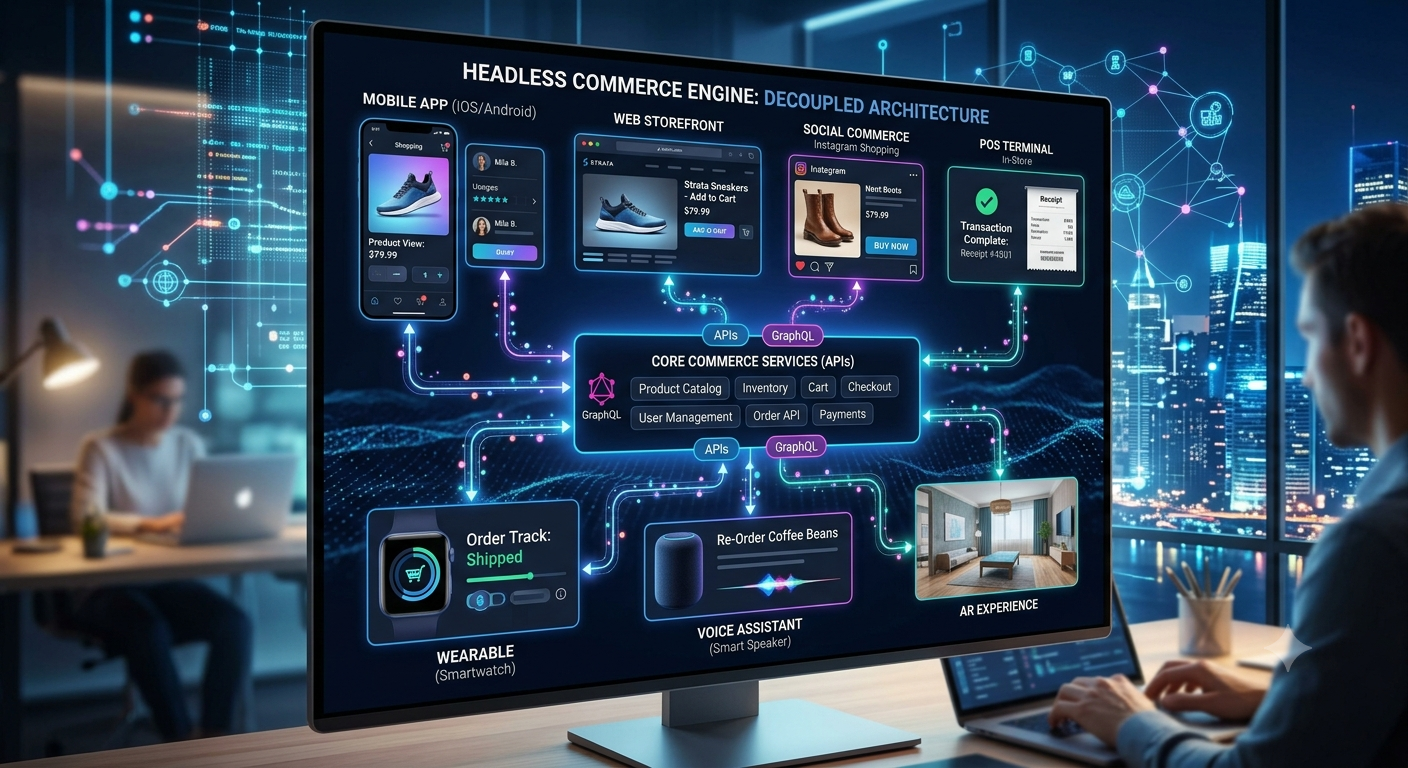
The retail industry is undergoing a fundamental shift as customers expect consistent, connected experiences across every touchpoint, whether they are shopping online, through a mobile app, in-store, or via social commerce.
Managing these channels separately often leads to fragmented inventory, inconsistent pricing, and disjointed customer experiences. Unified Omnichannel Retail Platforms solve this challenge by bringing every sales channel, inventory source, and customer interaction into a single connected ecosystem.
From real-time inventory synchronization and unified customer profiles to integrated order fulfillment and cross-channel marketing, modern omnichannel platforms help retailers, brands, and marketplaces deliver seamless shopping journeys while improving operational efficiency and revenue.
What Is a Unified Omnichannel Retail Platform?
A Unified Omnichannel Retail Platform is a digital ecosystem that integrates online stores, mobile apps, marketplaces, social commerce, and physical stores into a centralized system for inventory, orders, customer data, and fulfillment.
- Synchronize inventory across all channels in real time
- Maintain a single unified customer profile
- Manage orders from multiple sources centrally
- Enable flexible fulfillment options
- Deliver consistent pricing and promotions
- Personalize marketing across channels
- Generate unified enterprise-wide sales insights
Why Omnichannel Integration Matters
Retailers often operate separate systems for e-commerce, point-of-sale, marketplaces, and warehouses. Without a unified platform, this creates stock discrepancies, delayed order processing, and inconsistent customer experiences.
Integrated retail operations improve inventory accuracy, reduce overselling and stockouts, accelerate fulfillment, enhance customer loyalty, optimize marketing spend, and build resilience against demand fluctuations.
Unified Commerce Platforms
A unified commerce platform serves as the operational core of omnichannel retail, merging front-end shopping experiences with back-end operations.
- Product catalog and pricing management
- Order management across all channels
- Point-of-sale integration
- Customer relationship management
- Promotions, discounts, and loyalty programs
- Payment processing across channels
- Store and warehouse operations
Real-Time Inventory Visibility
Real-time inventory synchronization eliminates the disconnect between online listings, marketplace stock, and physical store availability.
- Accurate real-time stock visibility across channels
- Reduced overselling and cancelled orders
- Store-level inventory availability for online shoppers
- Faster identification of low-stock items
- Improved buy-online-pickup-in-store accuracy
- Better coordination between warehouses and stores
Advanced Retail Analytics
Modern analytics platforms convert transactional and behavioral data into actionable retail insights. Interactive dashboards provide real-time visibility into business performance.
- Sales performance by channel and location
- Customer purchase behavior and lifetime value
- Product performance and demand trends
- Inventory turnover and stock health
- Campaign and promotion effectiveness
- Channel profitability and conversion rates
AI-Powered Personalization & Intelligence
Artificial Intelligence is becoming a core component of modern omnichannel retail, helping organizations reduce operational complexity and improve engagement.
- Personalize product recommendations
- Predict demand at the channel and SKU level
- Detect fraud and unusual order patterns
- Optimize pricing and promotions dynamically
- Power conversational commerce and chatbots
- Improve customer segmentation
- Forecast inventory replenishment needs
Unified Customer Experience & Engagement
Delivering a consistent experience across every touchpoint remains a top priority for retailers. Modern platforms maintain one customer profile, consistent pricing, cross-channel loyalty, cart continuity, personalized communication, and unified customer service.
Order Management & Flexible Fulfillment
Order Management Systems, when connected to inventory and fulfillment networks, allow retailers to offer flexible and reliable delivery options.
- Route orders to the optimal fulfillment location
- Enable buy-online-pickup-in-store
- Support ship-from-store capabilities
- Manage returns and exchanges across channels
- Reduce shipping costs and delivery times
- Improve order accuracy and customer satisfaction
Compliance, Payments & Data Security
Retailers must operate within strict payment, privacy, and consumer protection standards. Omnichannel platforms help maintain PCI-DSS payment security, privacy compliance, regional tax rules, refund requirements, and marketplace-specific policies.
Cloud-Based Retail Collaboration
Modern omnichannel platforms enable secure collaboration among merchandising, marketing, store, and fulfillment teams through real-time data sharing, role-based access, multi-store support, and centralized reporting.
Benefits of Unified Omnichannel Retail Platforms
- Seamless customer experience across every channel
- Improved inventory accuracy and fewer fulfillment errors
- Better decision-making through real-time dashboards
- Reduced operational costs through unified workflows
- Increased revenue and conversion through personalization
- Stronger customer loyalty through connected experiences
Real-World Applications
- Fashion and apparel inventory sync across stores, e-commerce, and marketplaces
- Electronics and consumer goods catalog management with flexible fulfillment
- Grocery and quick commerce inventory coordination across local stores
- Beauty and personal care personalization and loyalty experiences
- Specialty and multi-brand retail operations through one platform
- Direct-to-consumer brands scaling across owned websites, marketplaces, and social commerce
Emerging Trends in Omnichannel Retail Technology
- Artificial Intelligence and Machine Learning
- Predictive demand and inventory analytics
- Social commerce and live shopping
- Voice and conversational commerce
- Augmented reality try-ons
- Composable API-first commerce architectures
- Headless commerce platforms
- Sustainable and localized fulfillment models
Why Organizations Should Invest in Unified Omnichannel Retail Platforms
Retailers investing in integrated omnichannel platforms gain accelerated digital transformation, improved cross-channel productivity, better customer relationships, higher data accuracy, reduced fulfillment costs, faster response to demand shifts, and stronger collaboration across the organization.
A connected retail technology infrastructure enables organizations to compete confidently in an increasingly digital, customer-driven marketplace.
Conclusion
Unified Omnichannel Retail Platforms are transforming how retailers engage customers and manage operations by combining centralized inventory, unified customer data, advanced analytics, and AI into a single connected ecosystem.
As fashion brands, D2C companies, grocery chains, and multi-brand retailers embrace digital transformation, unified omnichannel platforms will play a critical role in customer loyalty, operational efficiency, and sustainable growth.